


- Rosh Hashanah (רֹאשׁ הַשָּׁנָה) is celebrated on the 1st‐2nd Tishrei both inside and outside the Land of Israel. While the Torah (Vayikra 23:24‐25 & Bemidbar 29:1) says that Rosh Hashanah only lasts one day, the observance of Rosh Hashanah for two days both in Israel as well as the diaspora was an enactment of the early prophets and due to the fact that Rosh Hashanah falls at the start of the Hebrew month.
- The term רֹאשׁ הַשָּׁנָה literally means ‘the head/start of the year’ which reflects how this date is the beginning of the year as regards the calculation of the years, various cycles, for planting trees and for produce (see Rosh Hashanah 1:1). In addition to Rosh Hashanah marking the start of these cycles, our Sages teach that Rosh Hashanah marks the day in which mankind was created (Talmud Bavli, Rosh Hashanah 11a).
- Another name for Rosh Hashanah is יוֹם הַדִּין which literally means ‘day of judgment’. This is because our Sages teach that on this day, all our actions from the previous year are judged, and all our sustenance for the coming year is decided (see Talmud Bavli, Rosh Hashanah 8a). Given this, a key focus of the prayers recited on Rosh Hashanah focus on repentance.
- The Torah refers to Rosh Hashanah by two further names. One is יּוֹם תְּרוּעָה (see Bemidbar 29:1) which literally means ‘the day of blowing’, and the other is זִכְרוֹן תְּרוּעָה (see Vayikra 23:24) which literally means ‘a remembrance of blowing’. These names have been understood as referring to the duty to blow the Shofar on Rosh Hashanah. Given the difference between יּוֹם תְּרוּעָה and זִכְרוֹן תְּרוּעָה, the Sages explained that when Rosh Hashanah falls on Shabbat, we do not blow the shofar but instead, ‘remember the blowing of the Shofar’ (see Talmud Bavli, Rosh Hashanah 29b). However, on days when the shofar is blown, the custom is to hear 100 sounds of the Shofar on Rosh Hashanah. While the Torah does not offer a reason why we should blow the Shofar on Rosh Hashanah, numerous thinkers such as Rambam have suggested that the reason for this mitzvah is as a way to inspire us to stir us to repent on Rosh Hashanah (see Rambam, Hilchot Teshuvah 3:4).
- Because Rosh Hashanah marks the beginning of the year as well as the day in which we are judged, there are numerous customs that reflect the positive hopes we have for the year and the desire to rid ourselves of our previous sins. Regarding the former, it is customary to eat sweet and symbolic foods on the night of Rosh Hashanah such as apple and honey, dates and pomegranates. Additionally, it is customary to wear white clothes on Rosh Hashanah to symbolize purity of sin. Finally, it is the custom on Rosh Hashanah to visit a river or spring and metaphorically throw away our sins.
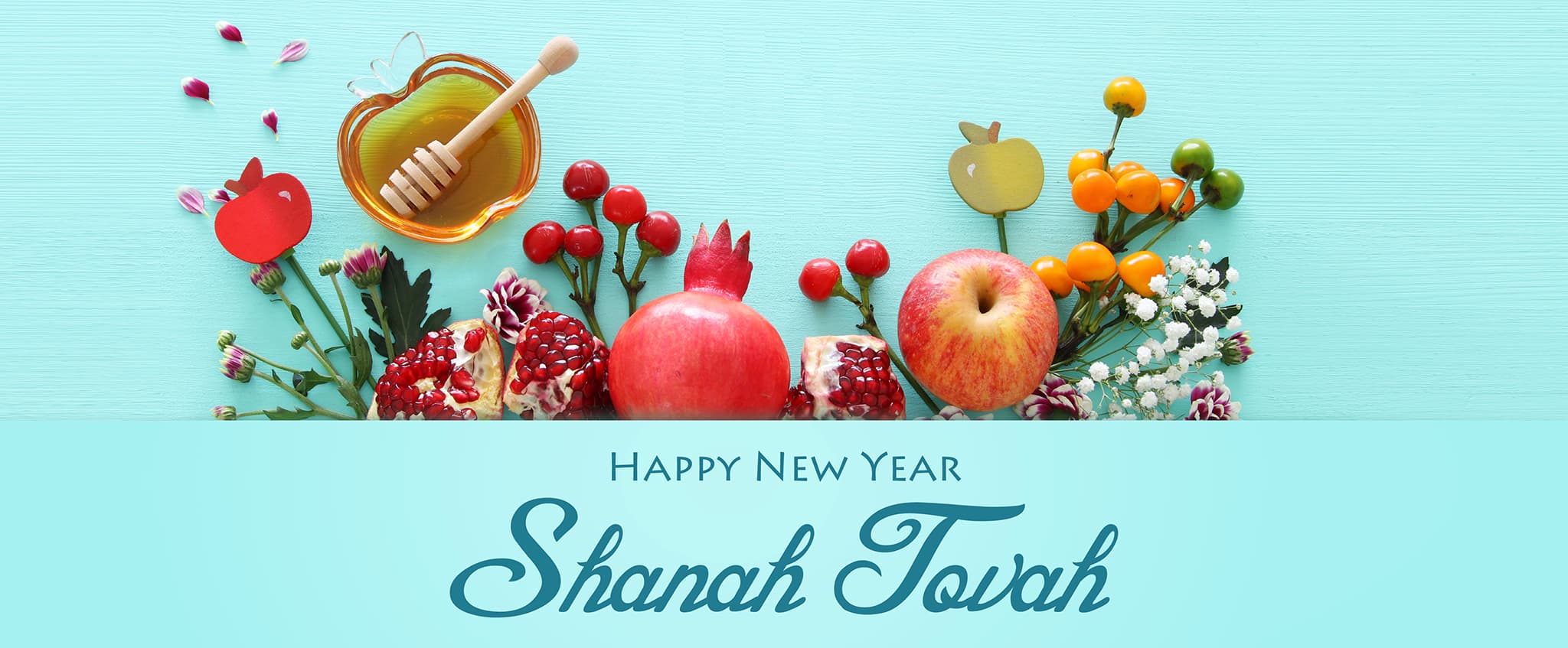
5 Key Facts about Rosh Hashanah
Here are all the resources you need for Rosh Hashanah this year:
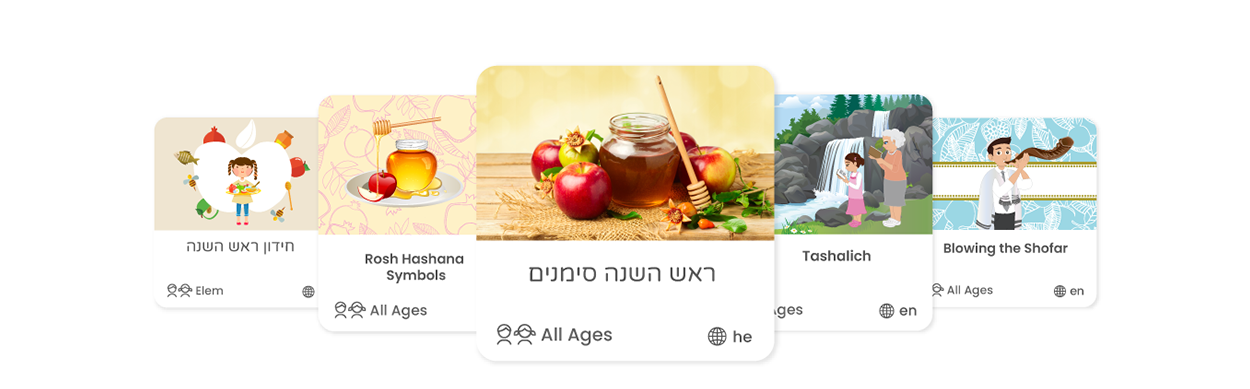
ROSH HASHANAH LESSONS, GAMES & INTERACTIONS
Play games on Rosh Hashanah that were created by teachers all over the world in many different languages.

FREE ROSH HASHANAH RESOURCES
Great Rosh Hashanah resources and ideas for activities on how to make
these High Holy Days more meaningful and fun!
(Available in English, Hebrew and French.
The English and Hebrew versions are updated for Jigzi.)

JI STUDIO
Let your kids make and print their own custom-made booklets, placemats and greeting cards for Rosh Hashanah.
MACHZOR TEXTS
We’ve created source sheets for you! Copy and paste into your Jigzi lessons. Or, insert any other texts through the Jigzi text tools.
Blog posts for Rosh Hashanah

The Call of the Shofar
Rifki Orzech tells us that whether the Rosh Hashana or Yom Kippur stories have merged over time, the call of the shofar folk-tale teaches us that every Jew can connect to God—whatever their age, status or knowledge level. Read more…

Let's get our kids teaching other kids about Rosh Hashanah
Sammy Morhaim shows you how you could encourage your children or students to use technology positively and empower them to teach others about Rosh Hashanah. Read more…

Deep communication and the Shofar
Sammy Morhaim discusses how, in the Internet age, connectivity is not necessarily communication. Deep communication. The Shofar on Rosh Hashanah is a powerful tool that represents that deep, sincere and real inner voice. Read more…
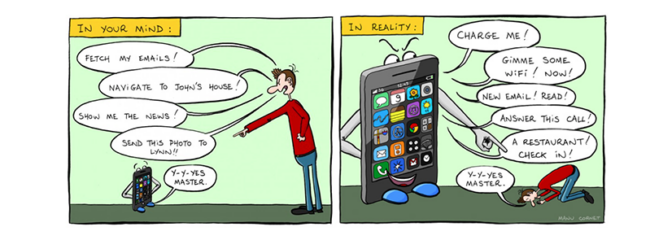
Tristan Harris and Rosh Hashanah
Sammy Morhaim talks about Tristan Harris, who is on a mission to “align technology with our humanity..”, and wants to use technology to enhance and not diminish who we are. How does this relate to Rosh Hashanah? Read more…

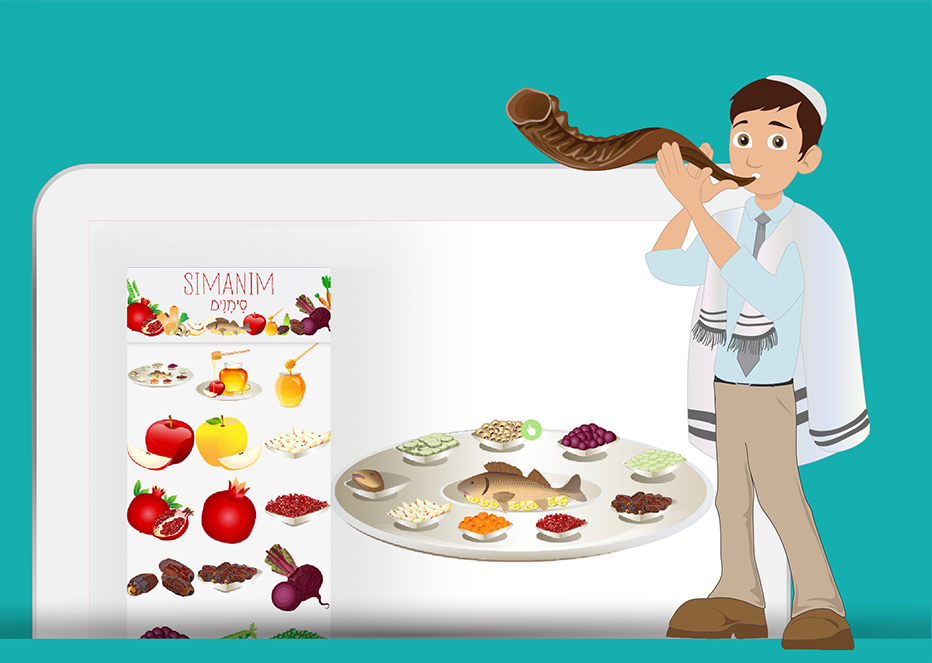
Visit Jigzi now and create your own Tishrei games and lesson: Images for making greeting cards, simanim, Rosh Hashanah customs, and more…