


- Vayikra 23:34 informs us that the festival of Sukkot, or סֻכּוֹת, begins in the 15th of Tishrei and lasts for seven days, after which we celebrate Shmini Atzeret, or שְׁמִינִי עֲצֶרֶת (literally, ‘the eighth day of the Festival’). While the first day/s of Sukkot and Shmini Atzeret are holidays when work may not be performed, work can be done on the intermediate days which are called chol ha’moed, or חֹל הַמוֹעֵד. In Israel, the festival of Simchat Torah, or שִׂמְחַת תּוֹרָה when we conclude and restart the annual Torah reading occurs on Shmini Atzeret, while outside of Israel, this festival is celebrated the day after Shmini Atzeret.
- Sukkot is one of the Shalosh Regalim, or שָׁלשׁ רְגָלִים, literally, ‘the three “foot” festivals’ which are mentioned in Shemot 23:14. These are the festivals when the Jewish people would travel, by “foot”, to the Temple in Jerusalem in order to partake in the festive sacrifices. While there is no longer a Temple, many Jews choose to take a vacation in Israel for the Shalosh Regalim.
- Like the other Shalosh Regalim, Sukkot is both a historical and agricultural festival. Historically, it commemorates the forty-year period when Bnei Yisrael wandered in the Wilderness. Agriculturally, Sukkot is a harvest festival and is referred to as Chag Ha’Asif, or חַג הָאָסִף (Shemot 23:16), the Festival of Ingathering.
- In order to commemorate the way in which Bnei Yisrael lived in huts in the Wilderness, it is the practice of many Jews to live in sukkot, or סֻכּוֹת (temporary huts) during this festival. While the walls of these sukkot can be made of any material, the roof – which is known as the schach, or סְּכָךְ – must be made of natural items such as wood/leaves. Though some people do not sleep in their sukkot especially if they live in colder climates, Jewish law dictates that one should eat one’s meals in the sukkah. On each night of Sukkot, biblical personalities known as ‘Ushpizin’ are invited into the sukkah.
- In addition to dwelling in sukkot, the Torah (Vayikra 23:40) also commands that we bring together The Four Species, or אַרְבַּעַת הַמִּנִים which are the: lulav, or לוּלָב (date palm branch), etrog, or אֶתְרוֹג(Etrog citrus fruit), hadasim, or הֲדַסִּים (myrtle branches) and aravot, or עֲרָבוֹת (willow branches). The custom is to hold together 1 lulav with 3 hadasim, 2 aravot, and 1 etrog.

5 KEY FACTS about Sukkot
Sukkot and Simchat Torah are called the "Days of Our Joy".
Here are fun and exciting ways for children to learn with joy about these holidays.
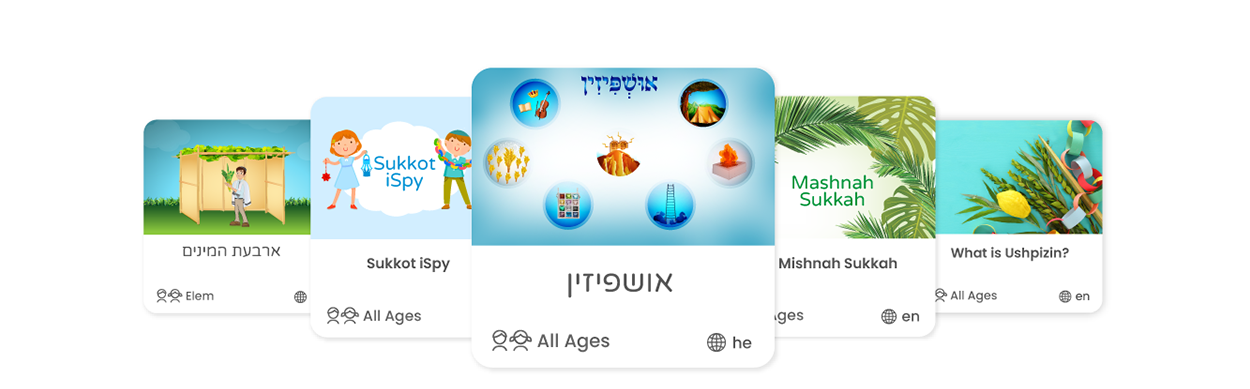
SUKKOT LESSONS, GAMES & INTERACTIONS
Play games and lessons on Sukkot that were created by teachers all over the world in many different languages.
FREE SUKKOT RESOURCES
Download our Sukkot e-book: A jam-packed resource for teachers full of ideas and activities to do together with your kids.
NOTE! The English and Hebrew e-books have been updated for Jigzi.
(Available in English, Hebrew and French)
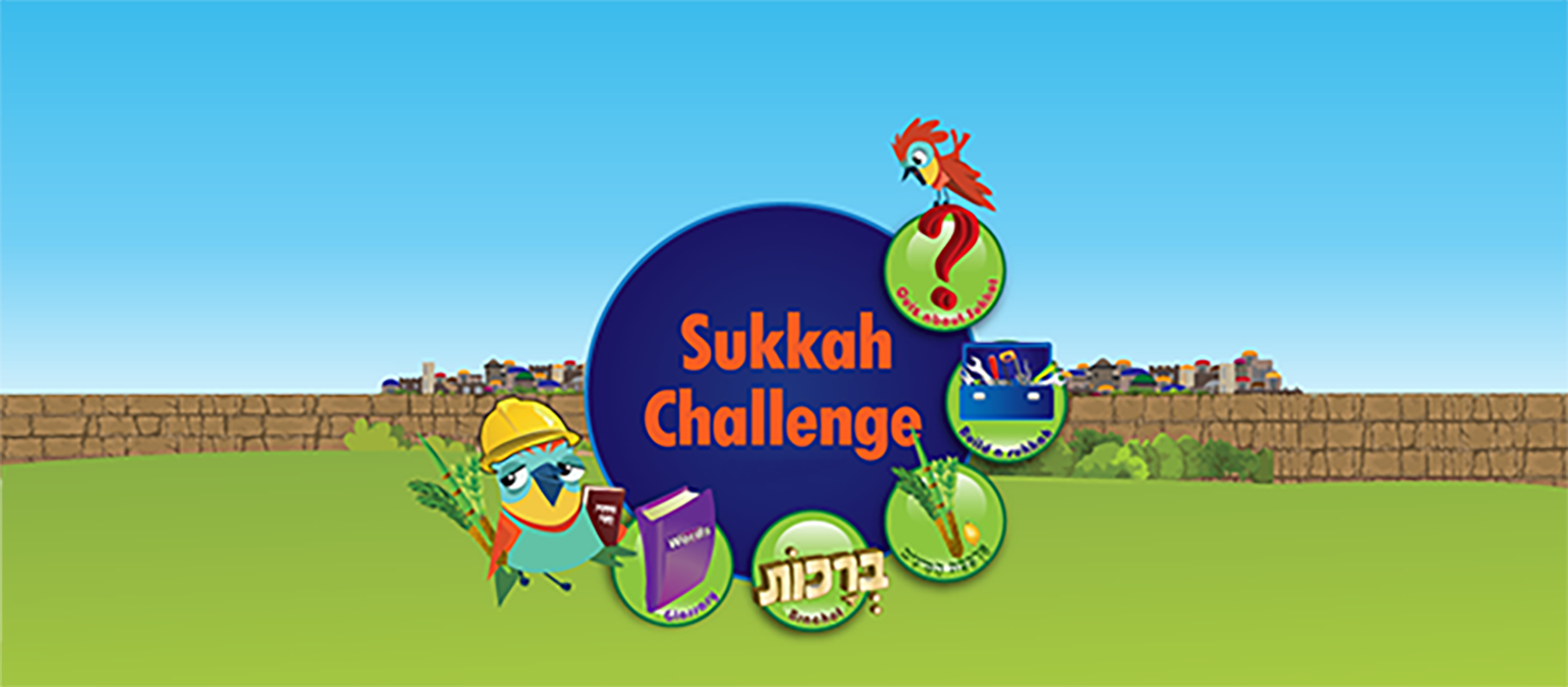
SUKKAH CHALLENGE
Our free animated app invites children to virtually experience the festival of Sukkot. Earn shekels by exploring the original blueprints of the Torah texts and the discussions of ancient Jewish sages, and then use these clues as a guide to find the Arba Minim and to build a sukkah.
(Available only as a download to install on your desktop)
BIBLE TEXTS FOR SUKKOT
We’ve created source sheets for you! Copy and paste into your Jigzi lessons. Or, insert any other texts through the Jigzi text tools.
Blog posts for Sukkot
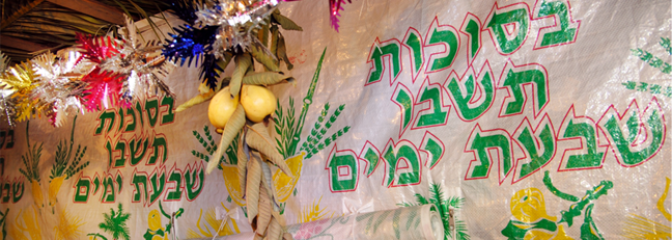
Permanent, Temporary and Digital Dwellings
Rabbi Johnny Solomon discusses living in sukkot, or temporary dwellings, both physical and digital. Read more…

We Have Your Back, Wonder Woman
Rifki Orzech recommends that an Eshet Chayil considers an app and buys it, plants ideas, supports education… and strengthens her arms. For hugs. Read more…

As I Click and Cut, I Create
Rifki Orzech says helps with sukkah decorations and how they can bring us all together: “We Stick Together Like Paper Chains and Duct Tape”. Read more…


Play over 100 digital games, quizzes and other activities in our Sukkot Collection… or use our Jigzi Creation Tool to create your own virtual Sukkah. You could also create and print your own posters for your Sukkah!