


- Yom Kippur (יוֹם כּפּוּר) takes place on the 10th Tishrei. This day is referred to as the ‘Sabbath of Sabbaths’ (Vayikra 16:31), from which the Rabbis thought that the same rules apply on Yom Kippur as those of a regular Shabbat. However, given the demand that on this day we should ‘afflict yourselves’ (see Vayikra 16:31 & Bemidbar 29:7), the Rabbis explained that there are additional restrictions on Yom Kippur including prohibitions of a) eating/drinking, b) wearing leather shoes, c) Bathing/washing & d) using creams, ointments or oils on your body. While we are commanded NOT to eat/drink throughout Yom Kippur, the Rabbis (Talmud Bavli, Yoma 81b) also taught that we ARE commanded to eat and drink before Yom Kippur begins. The name of the meal prior to Yom Kippur is the ‘Seudah Hamafseket’ (literally, the ‘separating meal’).
- The key theme of Yom Kippur is atonement. This is because on Yom Kippur, God forgave Bnei Yisrael who built the Golden Calf and gave Moshe a second set of tablets. This event transformed Yom Kippur to being the first national day of forgiveness for the Jewish People, and ever since, we are given a further opportunity on Yom Kippur for our sins to be forgiven. It is because of this association between Yom Kippur and the sin of the Golden Calf that the Kohen Gadol did not wear his golden clothes on Yom Kippur, so that he would not remind God of the sin of the Golden Calf, Instead, he wore white clothes to signify purity and absence of sin, inspired by the verse, “Even if your sins are like crimson, they can turn snow-white” (Isaiah 1:18).
- There are numerous customs associated with Yom Kippur. One of most unusual of these is called ‘Kaparot’ and is performed on the morning of the 9th of Tishrei. This involves the waving of a chicken or money around the head of those seeking atonement, and then either donating the chicken or the money to charity. A more widely spread custom is to wear white on Yom Kippur just like the Kohen Gadol.
- There are numerous additional prayers recited on Yom Kippur. These include the ‘Kol Nidrei’ prayer recited on the eve of Yom Kippur, as well as ‘Neilah’ (literally, ‘the sealing’) which is the prayer recited at the end of Yom Kippur signifying how our fate has been decided and sealed by God. As a further way to inspire atonement, we read the Book of Yona (Jonah) on Yom Kippur which stresses how everyone is worthy of forgiveness.
- As part of the Yom Kippur prayers, we also read about the special sacrifices that were offered in the Temple on Yom Kippur. We are told that two identical goats were brought to the Temple, one of which was killed through slaughter, and another, through wandering to die in the desert. This ritual is meant to express how two people with the same apparent lifestyle can experience different fates and remind us of the importance of atonement.

5 KEY FACTS about Yom Kippur
Here are all the resources you need for Yom Kippur this year:
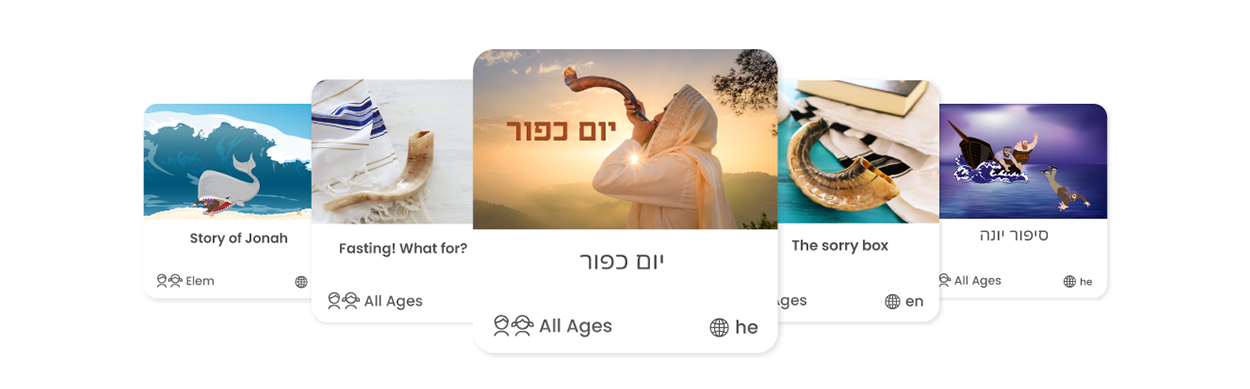
YOM KIPPUR LESSONS, GAMES & INTERACTIONS
Play games and lessons on Yom Kippur that were created by teachers all over the world in many different languages.

FREE YOM KIPPUR RESOURCES
Great Yom Kippur resources and ideas for activities on how to make
the High Holy Day more meaningful!
NOTE! The English eBook has been updated for Jigzi.
(Available in English, Hebrew and French)
MACHZOR TEXTS
We’ve created source sheets for you! Copy and paste into your Jigzi lessons. Or, insert any other texts through the Jigzi text tools.
Blog posts for Yom Kippur

When is Yom Kippur and what is a Jewish birthday?
Rabbi Johnny Solomon writes about Ji Calendar, because you need to know when the Jewish holidays take place, what days you need to take off for Yom Kippur, and when you need to start planning your Chanukah shopping. Read more…
Ji Taps into Yom Kippur
Rifki Orzech gives some ideas to keep you keep an even keel with young children on Yom Kippur. Read more…


Visit Jigzi now and create your own Yom Kippur games:
Packs for the story of Yona (Jonah), Yom Kippur customs and more….